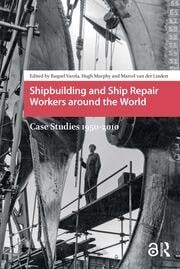

ABSTRACT
Maritime trade is the backbone of the world’s economy. Around ninety percent of all goods are transported by ship, and since World War II, shipbuilding has undergone major changes in response to new commercial pressures and opportunities. Early British dominance, for example, was later undermined in the 1950s by competition from the Japanese, who have since been overtaken by South Korea and, most recently, China. The case studies in this volume trace these and other important developments in the shipbuilding and ship repair industries, as well as workers’ responses to these historic transformations.
TABLE OF CONTENTS
Size: 0.37 MB
part |202 pages
North-western Europe
Title
chapter 2|70 pages
Labour in the British shipbuilding and ship repairing industries in the twentieth century
Title
Size: 0.62 MB
chapter 3|26 pages
Bremer Vulkan
Title
A case study of the West German shipbuilding industry and its narratives in the second half of the twentieth century
Size: 0.27 MB
Size: 0.28 MB
chapter 5|28 pages
The Norwegian shipbuilding industry after 1945
Title
Production systems, rationalisation, and labour relations, with special reference to Bergens Mekaniske Verksteder and Aker Stord
Size: 0.26 MB
chapter 6|28 pages
From war reparations to luxury cruise liners
Title
Production changes and labour relations at the Turku shipyard (Finland) between 1950 and 2010
Size: 0.35 MB
Size: 0.37 MB
part |172 pages
Southern and Eastern Europe
Title
chapter 8|32 pages
Always on the verge of sinking
Title
Labour and production in the Sestri Ponente shipyard, Genoa (Italy), 1950-2014
Size: 0.41 MB
chapter 9|24 pages
Work, workers, and labour conflicts in the shipyard Bazán/Navantia-Ferrol, Galicia (Spain), 1950-2014
Title
Size: 0.33 MB
Size: 0.17 MB
Size: 0.31 MB
chapter 12|26 pages
Work in the Portuguese shipyards of Lisnave
Title
From the right to work to precariousness of employment
1
Size: 0.39 MB
chapter 13|32 pages
The Gdańsk Shipyard
Title
Production regime and workers' conflicts in the 1970s and 1980s in the People's Republic of Poland
*
Size: 0.31 MB
Size: 0.33 MB
part |126 pages
The Americas and Australia
Title
Size: 0.30 MB
chapter 16|20 pages
The Argentinean shipbuilding industry
Title
Workers' struggles in a state shipyard
Size: 0.23 MB
chapter 17|20 pages
Production and labour of a state-owned enterprise
Title
A case study of an Argentinean shipyard, Astillero Río Santiago
Size: 0.23 MB
chapter 18|14 pages
Labour in the Brazilian shipbuilding industry
Title
A contribution to an analysis of the recovery period
Size: 0.24 MB
chapter 19|28 pages
Brazilian shipbuilding and workers between tradition and innovation
Title
Shipyards Caneco/Rio Nave and Mauá – Rio de Janeiro, 1950-2014
Size: 0.37 MB
Size: 0.33 MB
part |120 pages
Asia
Title
chapter 21|16 pages
Evolution and development of the shipbuilding industry in Bharati Shipyard Ltd, Maharashtra (India), from the 1970s to 2010
Title
Employer, employee, and production perspectives
Size: 0.42 MB
Size: 0.29 MB
chapter 23|24 pages
The lower labour market and the development of the post-war Japanese shipbuilding industry
Title
Size: 0.59 MB
chapter 24|22 pages
The evolution of labour relations in the South Korean shipbuilding industry
Title
A case study of Hanjin Heavy Industries, 1950-2014
Size: 0.31 MB
Size: 0.21 MB
Size: 0.11 MB
