

ABSTRACT
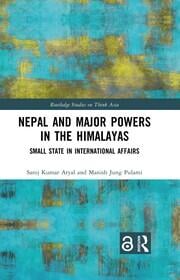
This book offers an unique analysis of small states in international relations from the perspective of Nepal, which lies at a strategic geopolitical position between China and India.
This book argues that Nepal has been in a strategic position between the great powers for many centuries. The departure point of the study has three broader premises. The first is the increasing uncertainty of polarity and power distribution in world politics. The second point is the understudied aspect of the role that small states play in international relations. The final point emphasises the empirical offering that Nepal can provide to the understanding of the role of small states in great power politics. Exploring the Nepalese way of great power management, the authors provide a wider explanation of the position of small states as geopolitical actors in international relations.
An important perspective on the dynamics of China-India in the changing world order, this study will be of interest to researchers studying geopolitics, international relations, Asian studies and Global Affairs.
The Open Access version of this book, available at https://www.taylorfrancis.com, has been made available under a Creative Commons [Attribution-Non Commercial-No Derivatives (CC BY-NC)] 4.0 license.
