
ABSTRACT
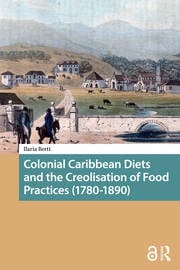
Colonial Caribbean Diets and the Creolisation of Food Practices (1780– 1890) approaches the topic with a comparative analysis of the British and Spanish Caribbean to give a fresh perspective on the history of the empires during the long nineteenth century. In order to examine processes of colonial encounters, negotiations, appropriations, rejections, mutual influences, and hybridisation, it discusses the following aspects: How did colonists react when they came into contact with unfamiliar foodstuffs and dishes? Did they reject or accept them? What did they say about food that was alien to their own culture? Did the colonists pursue specific strategies in order to accept these new foods and attempt to replicate the longed-for foods with which they were familiar?
