
ABSTRACT
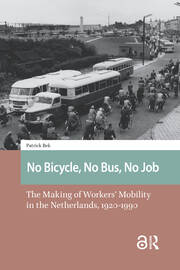
For working people, the cost of getting to work, in terms of time and expense, is a crucial aspect of daily life. In the twentieth century, people’s opportunity to travel increased. This did not, however, apply to everyone. The absence of affordable housing near job locations combined with the lack of safe, efficient, and affordable mobility options aggravated social exclusion for some. No Bicycle, No Bus, No Job details how power relations have historically enabled or restricted workers’ mobility in twentieth century Netherlands. Blue-collar workers, industrial employers, and the state shaped workers’ everyday commute in a changing playing field of uneven power relations that shifted from paternalism to neo-liberalism.
TABLE OF CONTENTS
Size: 0.55 MB
Size: 1.56 MB
Size: 0.31 MB
Size: 1.28 MB
Size: 0.26 MB
Size: 2.40 MB
Size: 3.77 MB
Size: 2.26 MB
Size: 1.75 MB
Size: 0.20 MB
