ABSTRACT

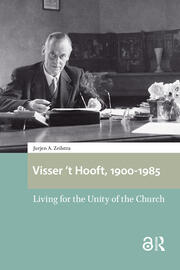
God’s diplomat, the pope of the ecumenical movement, but also an acerbic theologian and a difficult person: this is how journalists characterised Willem Adolf Visser ’t Hooft (1900-1985). He was one of the best-known Dutch theologians outside the Netherlands and he left his mark on the world church. Even at an early age, he made profound efforts in support of international ecumenical youth and student organisations (Dutch Student Christian Movement, YMCA and World Student Christian Federation). He led the World Council of Churches during its formative stages (from 1938), and after its formal establishment in 1948 became its first general secretary, serving until 1966. To Visser ’t Hooft, the unity of the church was both an article of faith and a pragmatic organisation of church influence in a disunited world.

chapter |12 pages

Introduction

Title
The Importance and Limitations of a Biography
Size: 0.17 MB

chapter 1|36 pages

The World Opens Up, 1900-1924

Title
Size: 4.54 MB

chapter 2|80 pages

The School of International Encounter

Title
Working with Youth and Students, 1924-1939
Size: 5.43 MB

chapter 3|54 pages

Church Unity in Wartime, 1939-1945

Title
Size: 1.68 MB

chapter 4|50 pages

From ‘Spiritual Contact’ to Political Involvement

Title
The Swiss Road, 1942-1944
Size: 0.43 MB

chapter 5|40 pages

Towards a World Council of Churches

Title
Reconciliation and Reconstruction, 1945-1948
Size: 2.38 MB
Size: 5.63 MB
Size: 1.64 MB

chapter 8|40 pages

Roman Catholic Contacts

Title
‘Nostra Res Agitur’, 1948-1969
Size: 1.75 MB

chapter 9|72 pages

Obsolete Institutionalism?

Title
The Twilight Years, 1966-1985
Size: 4.63 MB
Size: 0.82 MB