

ABSTRACT
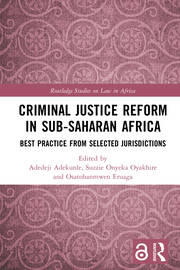
Restorative justice processes are increasingly included in criminal justice systems of several countries as an alternative to traditional responses to crime. They are founded on the principle that criminal behaviour harms the victim and the community and not just the state. Accordingly, a core principle of restorative justice is the inclusion of victims in the criminal justice process to address the consequences of this harm. In Nigeria, criminal justice reforms, especially the enactment of the Administration of Criminal Justice Act (ACJA) 2015, aim to protect victims’ rights and interests in participating in the criminal justice system. However, their participation is often hindered by revictimisation or secondary victimisation, and this exposure to further harm undermines a central objective of restorative justice. Adopting a doctrinal method, this chapter argues that to effectively facilitate victim participation and reduce the effects of victimisation, victim protection mechanisms are required. Accordingly, the chapter examines the concept of restorative justice, victimisation, and the nature of existing victim protection mechanisms available in Nigeria. It then considers the protective mechanisms adopted by Kenya, proposing how Nigeria can draw on the Kenyan practice to reform its own framework.
