
ABSTRACT
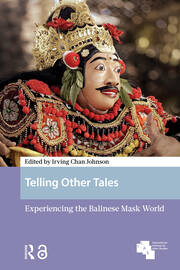
The study of material culture, and most particularly, the subfield of material religion has caused us to regard some, if not most, objects as social actors in their own right. This is most literally apt in those traditions of religious practice where masks and other images are ritually ensouled and enlivened, their social presence made explicit. This is the case for many (but not all) of the Balinese masks used in temple rituals. Studies of masks and performance have shown that their power to heal and to throw devotees into trance is relative; one mask can be more renowned than another of the same general type. The power of a mask might also wax and wane over time. The view from Bukit Poh situates the social life of a mask within the unfolding history of a community of masks, a mask's powers ascendant or declining in relation to others in the community of Topeng masks over the longue durée of Bukit Poh villagers’ historical memory.
