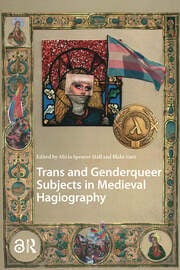

ABSTRACT
Sometime after 1188, Engelhard of Langheim composed a story about a Cistercian monk named Joseph. Engelhard insisted Joseph was a woman, but he also undercut normative assumptions to display gender fluidities for which he lacked a conceptual vocabulary. He preserved a binary gender system that controlled the dangers of a woman in a male monastery. Yet his willingness to ventriloquize Joseph’s male voice presents a Joseph who, with God’s help, successfully performed his male trans identity, while his depiction of Joseph’s death suggests Joseph’s soul miraculously became female after he died. Engelhard did not explicitly acknowledge either possibility, but in a world in which the miraculous could break naturalized categories, both transitions remain beneath the surface of his tale.
