
ABSTRACT
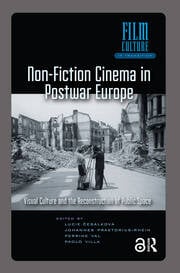
In the process of recovering from WWII, European societies greatly relied on non-fiction cinema a fundamental means of communication, propaganda, and governmentality. In both the Western and the Eastern Bloc, documentaries, newsreels, and amateur production served the goal of rebuilding the war-devastated nations, reconfiguring their political, economic, and cultural spheres while dealing with the recent trauma of the conflict. Highlighting the concepts of spatiality, proxemics, and public space, this introduction intends to frame through a transnational perspective the complex media system and visual culture centered around non-fiction films, and how they were a major actor in shaping postwar Europe.
