
ABSTRACT
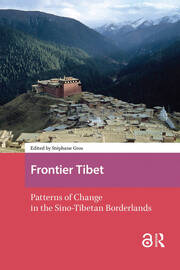
It is quite common to conceive of China and Tibet as two distinct culturally bounded entities in spite of the fact that the ‘Tibet’ we generally have in mind is territorially part of the People’s Republic of China (P.R.C.). Only an internal administrative border separates the Tibet Autonomous Region (T.A.R.) from adjacent provinces, like Sichuan to the east, where today we find a significant number of Tibetans who make up the majority of inhabitants of other administrative units, such as the Ganzi (Kandzé) Tibetan Autonomous Prefecture. These current administrative divisions represent the modern ordering and territorialization of the so‐called Sino‐Tibetan borderlands, and the region called Kham.
