
ABSTRACT
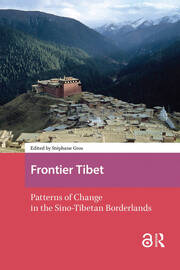
This article discusses the expression ‘Tibetan Borderlands’, a designation commonly used in Tibetan scholarly works when dealing with Kham and Amdo areas. It also reconsiders the centre‐periphery dynamics between Central Tibet and the eastern regions, especially in the contemporary context. Contrary to most studies that focus on the relations between the eastern Tibetan regions and China, this paper questions their relation to the traditional centre: Lhasa and Central Tibet. In view of the current decline of Lhasa and its prevalence as a centre, is it still relevant today to speak of the eastern Tibetan regions as borderlands, and all the more so when they appear to have taken over from Lhasa as the new Tibetan centre?
