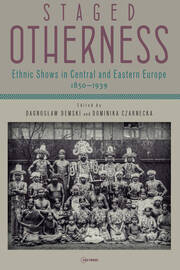

ABSTRACT
The commercial exhibitions of people of non-European origin in Europe and North America throughout the nineteenth and early twentieth centuries are often seen as an effort to legitimize and celebrate—via the construction of an exotic, racially and culturally different Other—the dominance of specific European nations, or Europe as such, over non-European regions. Such an interpretation of the shows by historians of science, however, leaves open for investigation the specificities of ethnographic shows in regions and societies that for various reasons lacked, or lagged behind in acquiring, colonial possessions even though their inhabitants were certainly informed about and sometimes profited from the colonial endeavors of other nations.
