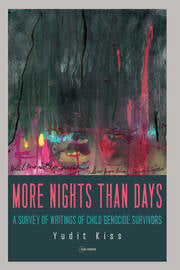

ABSTRACT
Many children, including the authors of the works explored here, were able to emerge from these abysmal depths thanks to their resilience and creativity. Condemned to death, persecuted, hiding, locked in prisons, ghettos and camps, torn away from their familiar environment and often from their families and friends, deprived of personal objects and, in the camps, even their own clothing and body hair, the children had to find resources in their internal world. Astonishingly, they managed to mobilize a rich array of means that helped them to cope and survive. They were able to draw strength from their imaginary worlds, their personal memories, and memories of culture, mankind’s collective memory, which helped them to hold on to their values that proved to be meaningful even in these circumstances. They were able to find comfort in natural beauty that represented a universe not soiled by human destruction; in their spirit of discovery and revolt, their sense of humor, their ability to switch off their external circumstances and play, have fun, or be creative in many other ways. They strove to maintain or create strong human connections that helped them enormously in coping with their situation. Adults also found some of these survival tools, but the way children used them was unique to them.
