
ABSTRACT
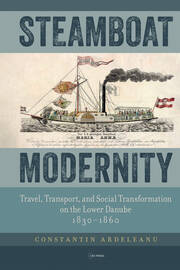
In spite of numerous inconveniences—crowding, mosquitoes, fear of the shivers of malaria—the Austrian steamboats that circulated regularly on the Black Sea and the Danube were, at the beginning of the 1840s, the best choice for a journey between Istanbul and Vienna. This was the conclusion reached by the English doctor Octavian (John) Blewitt in the torrid days of late July 1840. Blewitt (1810–1884) was secretary of the Royal Literary Fund, an institution that supported the publication of the works of British writers, and was himself a prolific author of travel literature, which he signed with the pseudonym “Brother Peregrine.” He also edited several volumes in the “Murray’s Handbooks for Travellers” series, which was extremely popular in the period (see below); so his option was that of a relatively well-informed traveler. 1
