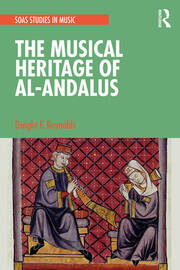

ABSTRACT
Unlike their father, however, ‘Abd al-Rahman and al-Mughira brought their passion for music out into the open and both of their households soon became the sites of public concerts and performances. If music had been a private pleasure during the reign of al-Hakam, during the reign of his son and successor ‘Abd al-Rahman II, it became a publicly acknowledged passion of the emir. The earliest mention of Ziryab in Andalusi sources is in al-‘Iqd al-farid [The Unique Necklace], an encyclopedic compilation of literature and culture penned by Ibn ‘Abd Rabbih (860–940), who was nearly a contemporary of Ziryab, having been born in Cordoba only a few years after his death. To return to Ibn ‘Abd Rabbih’s account of Ziryab’s misadventure in the Aghlabid court, it is crucial to note that Ziyadat Allah was the son of a slave girl, most probably black, as was the famous pre-Islamic poet ‘Antara.
