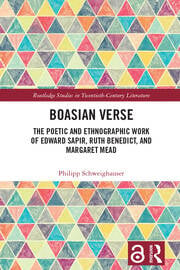

ABSTRACT
Chapter 1 begins with an assessment of Ruth Benedict’s poetry that places its probing of cultural and poetic alterity right at the intersection of nineteenth- and twentieth-century aesthetics. I propose to read her verse both biographically and ethnographically. Even as poems such as “Unshadowed Pool” and “In Parables” probe the ethics of making visible the self and the cultural other, many a poem by Benedict uses foreign cultures as foils to enable a sharper perspective on the author’s own culture. Thus, Benedict the poet joins Benedict the anthropologist in staging a countercultural critique. As a reading of Benedict’s poem “Myth” makes clear, though, her poetry stages that critique in ways that differ from her ethnographic writings.
