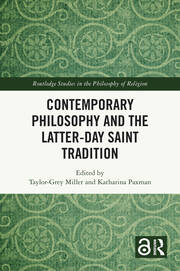

ABSTRACT
The Latter-day Saint conception of God is thoroughly anthropomorphic. On the one hand, this means Latter-day Saints have no trouble making sense of our literal, univocal talk of God. On the other, it means they have an apparent problem motivating this conception philosophically. Classical theists are in the reverse situation; they can appeal to God in metaphysical explanations and advert to him as an appropriate object of worship, but have a much harder time defending our ability to talk about God. After noting the radical differences between these two conceptions of God, this chapter argues that the traditional defense of theological predication in terms of analogy fails to show that our talk of God is meaningful if classical theism is true; this lends indirect support to more anthropomorphic conceptions of God like that adopted by Latter-day Saints.
