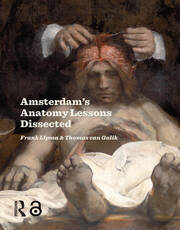

ABSTRACT
During the seventeenth and eighteenth centuries, a total of eighteen group portraits were painted for the Amsterdam Surgeons’ Guild. Nine of these portraits are actual anatomy lessons, all of which have been discussed in detail in the earlier chapters. Almost all of the other group portraits of the governors depict a group of men posing around a table. The theme of the anatomy lesson is absent in these paintings. All attention is focused on the Board of Governors. Objects lie on all the tables to indicate the men’s profession, for instance: medical reference books, a page from an anatomical atlas, surgical instruments, bladder stones and bones. The majority of the ‘anatomy lesson’ painting date from the seventeenth century, whereas most of the group portraits of the governors were painted during the eighteenth century. In a sense, they can be considered the successors to the anatomy lessons. Nevertheless, all portraits share the same purpose — that of a group portrait of surgeons — while the two different portrait types were inextricably linked.
