
ABSTRACT
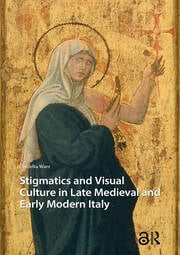
By expanding the discussion of stigmata to focus on visual culture, it is possible to deepen our understanding of contemporary visuality as well as our awareness of debates concerning images and image making between the thirteenth and sixteenth centuries. Francis of Assisi (d. 1226) and Catherine of Siena (d. 1380) are important to this debate as the two saints most frequently depicted with miraculous stigmata. However, limiting considerations to representations of these two saints prevents a full understanding of the role of gender in the visual culture of stigmata. By placing Saints Francis and Catherine within the wider context of stigmatic visuality, it is possible to broaden our understanding of issues relating to gender, miracles, and the representation of knowledge.
