
ABSTRACT
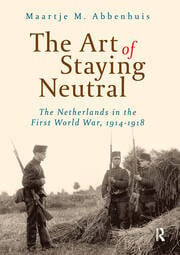
Throughout the continent, Europeans met the coming of war in August 1914 with excitement, fear, and agitation. This was as true for residents of a small, neutral country in the northwestern corner of Europe as it was for the inhabitants of nations who were to fight and die by the millions. For over four years, the Dutch lived in the shadow of a war that was being waged violently in nearby Belgium and France. Throughout that period, they feared an invasion, mobilised the army and navy, and many prayed that their neutrality would be safeguarded. And it was. But neutrality was not a magic charm that staved off the nasty effects of warfare. On the contrary, in remaining neutral, the Dutch were presented with a multitude of challenges, crises, and disasters that affected every facet oflife. Over 400,000 men between the ages of 20 and 40 were conscripted into the armed forces, removed from their families and livelihoods. The war hampered the shipments of vital goods, while the rationing of fuel and foodstuffs became increasingly common and stifling. Hundreds of thousands of foreigners, both civilians and soldiers, sought sanctuary in the country, presenting a mammoth refugee problem for the authorities. The government introduced new laws and regulations, created special distribution and administrative bureaux, and used the military to handle matters for which it had no other solutions.
