
ABSTRACT
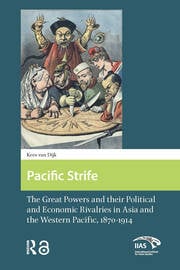
Between 1870 and 1914 six countries became involved in competition over economic and political influence in the Western Pacific. Three of them were old established colonial powers: Great Britain, France and Russia. The others were relative newcomers: the United States of America, Germany and Japan. The United States had entered the scene after Great Britain had recognised its independence in 1783. Germany and Japan gained economic prominence, which allowed them to look for overseas expansion, only in the closing decades of the nineteenth century. It was Germany, with its ambition to become a world power, complete with a mighty commercial fleet and navy and its own outposts and colonial possessions in Africa and the Pacific, that set in motion a development that culminated in the dividing up of the Western Pacific. Japan and the United States would become important players in the Western Pacific, a little later, at the close of the century. There were still other colonial powers in Asia – the Netherlands, Spain and Portugal – but, being not very powerful, they played a very minor role in the power struggle that evolved. With other countries seeking new colonies and coaling stations, their main concern was guarding what they considered rightfully theirs; with Spain being forced to dismantle its colonial empire by the end of the century.
