
ABSTRACT
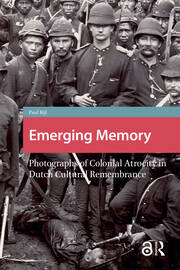
This chapter investigates the social biography of the 1904 photographs as they were semanticized during the colonial period from the moment they had emerged from the social frame of the military. Although in the Indies their existence was already publicly known due to a June 1904 article in the newspaper Deli Courant (see below) and through the exhibition in Batavia in February 1905, in the Netherlands it was only in the summer of 1905 that a number of them (TT, PE, and KR2) became part of the public debate due to the publication of Kempees’s book. 85 After 1905, the photographs were published two more times during the colonial period: KR2 was printed in a 1907 booklet (Wekker 1907), while a 1938 book included three photographs, namely KR2, KR3, and KL1 (Zentgraaff 1938). What I will show in this chapter is that the perceptible order they displayed was at odds with the Dutch distribution of the perceptible within which they were semanticized, causing disturbances and irritations of what it meant to be Dutch and to have an empire. Crucial in this respect was that, in colonial matters, a distribution of the perceptible was dominant in the Netherlands in the early twentieth century which can be characterized as “ethical”, i.e. a set of implicit laws that produced the Dutch not only as subjugators but also as caretakers of the natives in the Indies.
