
ABSTRACT
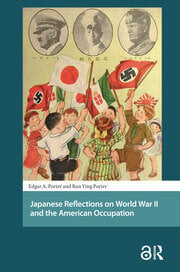
Japanese education during the war years was founded on a philosophy of the divine nature of the emperor and the superiority and invincibility of the Japanese people and their military. The grounds for this heightened sense of patriotism and emperor worship by schoolchildren had been sown a decade before under the direction of the Ministry of Education and other agencies. Playing up the glory still celebrated from victory in the 1904-1905 Russo-Japanese War, the Department of the Imperial Household Ministry presented each school with a portrait of the emperor, the most important symbol of Japan's rising nationalism. In 1928 the government had produced a Statement Concerning the Guidance of Thought, which encouraged the “promotion of education” and the “cultivation of the concept of the kokutai.” 1 As the title states, it was a plan to guide the thoughts of young people in the direction of unquestioned loyalty to the emperor at all times. The Ministry of Education directed that all schools and universities throughout the country implement this new campaign to guide young people in a unified direction. By the 1930s a cult of worship for the emperor was in full force, giving the military leaders in Japan an unquestioned mechanism to transform Japan into a militaristic nation with expansive dreams. 2
