
ABSTRACT
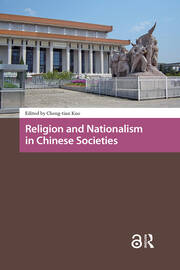
Originating in the common responses to threats of modernity in the beginning of the twentieth century, three models of religion-state relations have respectively taken shape in China, Taiwan, and Hong Kong, and each has important implications for both internal stability and external relations. In China, a totalitarian state religion of Chinese patriotism has been under construction and has almost fully established itself. In Taiwan, the initiation and consolidation of democracy after 1987 has contributed to the rise of a civil religion shared by many religions that provides for healthy checks-and-balances between the state and religion. In Hong Kong, there has been increasing confrontation between the totalitarian Chinese patriotism and a fragile civil religion.
