
ABSTRACT
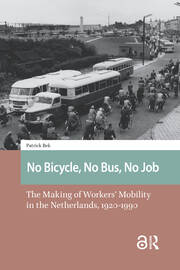
Amid the push for rapid postwar industrial reconstruction, workers were on the move, again. The economy was expanding, and there were plenty of jobs—though of ten in the wrong location. Besides jobseekers from southern Europe and northern Africa traveling by bus, train, and airplane to western Europe, the postwar decades saw increasing movements of commuting workers. In the Netherlands too, the increasing daily movements of dockers, miners, textile and factory workers in company buses was a “mass migration day after day in the Netherlands,” wrote De Tjd reporter Gerard de Groot. 1 The Dutch Central Bureau for Statistics (CBS) judged postwar commuting (“forensisme”) a “mass-scale phenomenon.” And the census for 1947, 1960, and 1971 supported the assessment. By 1960, one million workers—a third of the total working population—were employed outside the place they lived, with two-thirds traveling daily to their jobs in mining, steelworks, and manufacturing. 2
