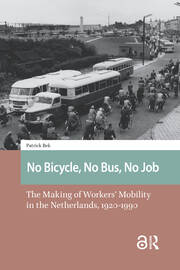

ABSTRACT
When in 1975 the 22-year-old jobseeker K. appeared in court for declining a job that he considered poorly accessible, the Central Board of Appeal found his reasoning ungrounded. The board ruled: K. had to accept the job and find a way to get there or lose his unemployment benefits. Anyone who like K. chose to reside in a place with limited job opportunities bore sole responsibility for “taking necessary measures” to get to potential places of work. 1 The case became a legal landmark case that established the new norm. The case ruled that workers were now solely responsible for getting to their workplace. The ruling was a bellwether for the neoliberal economic order.
