
ABSTRACT
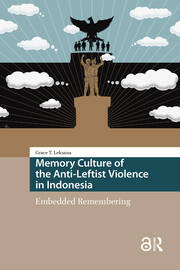
Approximately five hundred thousand to one million people were killed in the Indonesian anti-leftist violence in 1965–66. However, the official narrative largely excluded this particular atrocity and depicted the violence as a military success in saving the nation by eliminating the communists. Through a micro-study in a rural district in East Java, where the anti-leftist violence mostly took place, this research presents the complexity of remembering past violence. Memories of violence are not exclusively affected by the state’s memory projects, but are actually embedded (historically and socially) in the context where the violence erupted.
