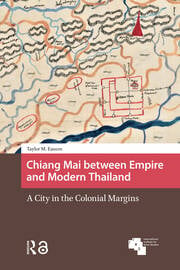

ABSTRACT
While Chiang Mai’s economic and political spaces were co-opted by the modern Siamese state, sacred space was largely ignored and thus remained open to manipulation and mobilization. After a period of intense distress and crisis, these spaces were mobilized by a charismatic monk Khruba Siwichai. The sacred space of the cities of the north played an important role in shaping the relationship between Chiang Mai and Bangkok and set up anxieties that persist to the present. After this “last stand” of Chiang Mai autonomy, the new postwar Thai state began the task of fixing the meaning of the city’s history through statuary monuments and public ritual in an attempt to ensure the city would remain durably linked to Bangkok.
